MoroccoMiles
Fes, Morocco — The Spiritual Capital
All destinations

Imperial Cities · From USD 2,150

Private Custom Fes Tour

Fes — The Spiritual Capital

Local insider briefing

Our native guides were born within these nine thousand historic lanes of Fes el-Bali. A private custom Fes tour typically needs two to three unhurried days from USD 2,150 to read the medina as a living manuscript rather than a maze.

Local insider tips from our 15 years of craft keep Fes intimate: historian-led water routes, family pottery ateliers, and rooftops where satellite dishes share the sky with Marinid minarets. This is Morocco's scholarly heart, and we walk it at the pace of people who grew up inside it.

Cultural introduction

Fes el-Bali remains one of the world's largest car-free medieval cities, a dense, scholarly medina of madrasas, foundouks and craft guilds that has shaped Maghrebi thought since the ninth century. In the lanes, donkey trains still squeeze past cedar doors, and the air carries cedar shavings, fresh bread and the mineral tang of the tanneries. To walk Fes is to enter a living manuscript: Marinid colleges glittering with zellige, the call to prayer from al-Qarawiyyin, and artisans who still work as their grandparents did, in copper, leather, silk and clay.

Fes el-Bali · University of al-Qarawiyyin · Chouara Tannery · Bab Boujloud · Bou Inania & Al-Attarine Madrasas · Borj Nord

Suggested private stay: 3 days · 2 nights, shaped around authentic hand-crafted passages and certified native guides.

Visual exploration

Landmarks of Fes

Local insider tips from our 15 years of craft: hidden historical gems and authentic hand-crafted passages, timed with certified native guides.

Fes el-Bali in Fes
Suggested Duration · Half Day

Fes el-Bali

Fes l-Bali

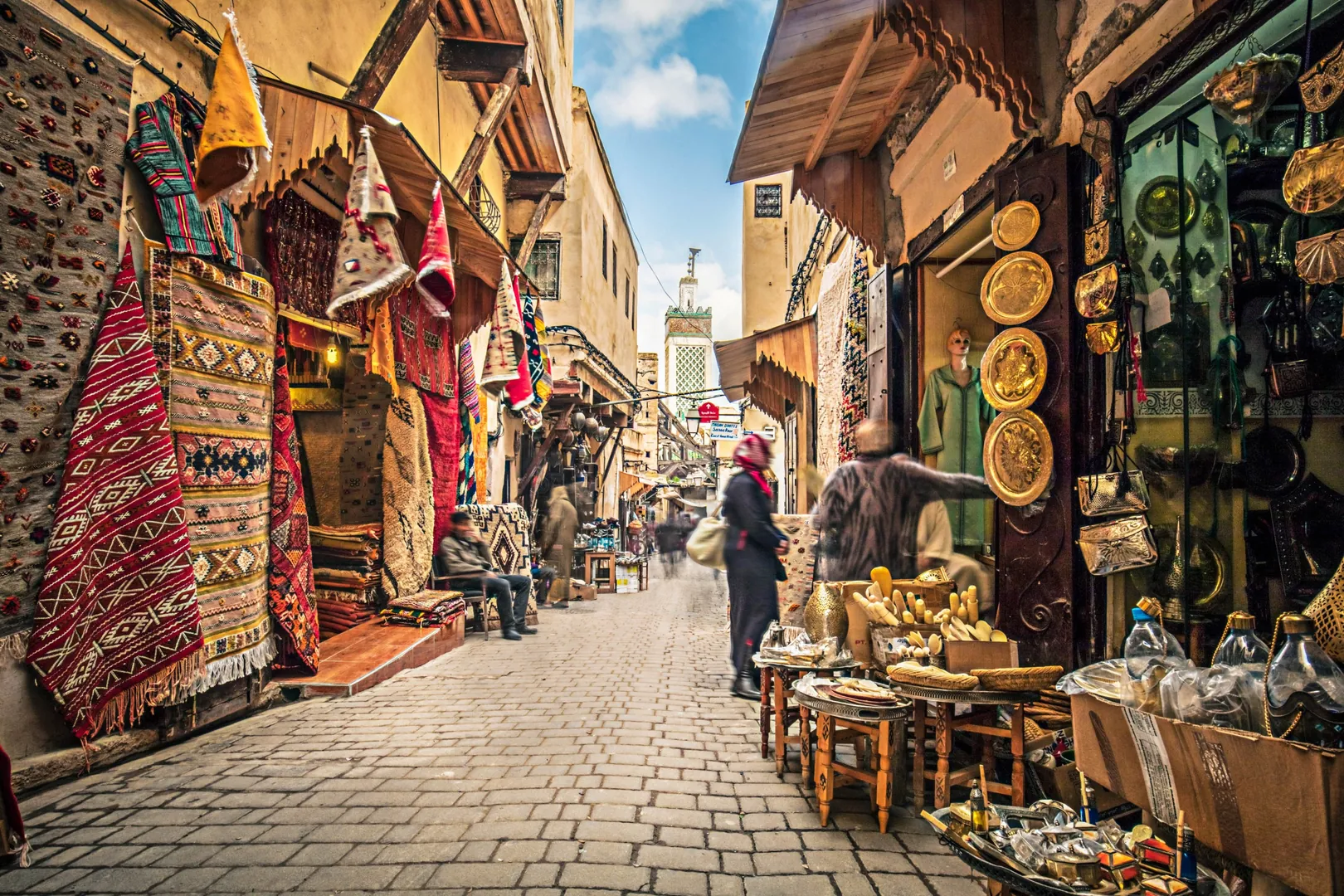
Nine thousand lanes form a living medieval organism: tanneries steaming in the river hollow, copper workshops ringing like forges, spice corridors scented with cumin and orange blossom, and hidden riads whose courtyards open like secret gardens. Fes el-Bali is not a reconstructed heritage park; it is a functioning city of guilds, mosques and neighbourhood fountains, recognised by UNESCO as one of the Islamic world's great urban achievements. Hire a historian guide and the maze becomes a narrative of Marinid scholarship, Andalusian refugees and Maghrebi urban genius. You will step into an active foundouk, watch a coppersmith raise a tray from a single sheet of metal, then sit for mint tea on a rooftop as the medina's satellite dishes and minarets share the same honey-coloured sky. The essential experience is surrender: getting deliberately lost, then finding your way by smell, sound and the slope of the hill.
University of al-Qarawiyyin in Fes
Suggested Duration · 1 Hour (exterior & surrounding lanes)

University of al-Qarawiyyin

Jami3at l-Qarawiyyin

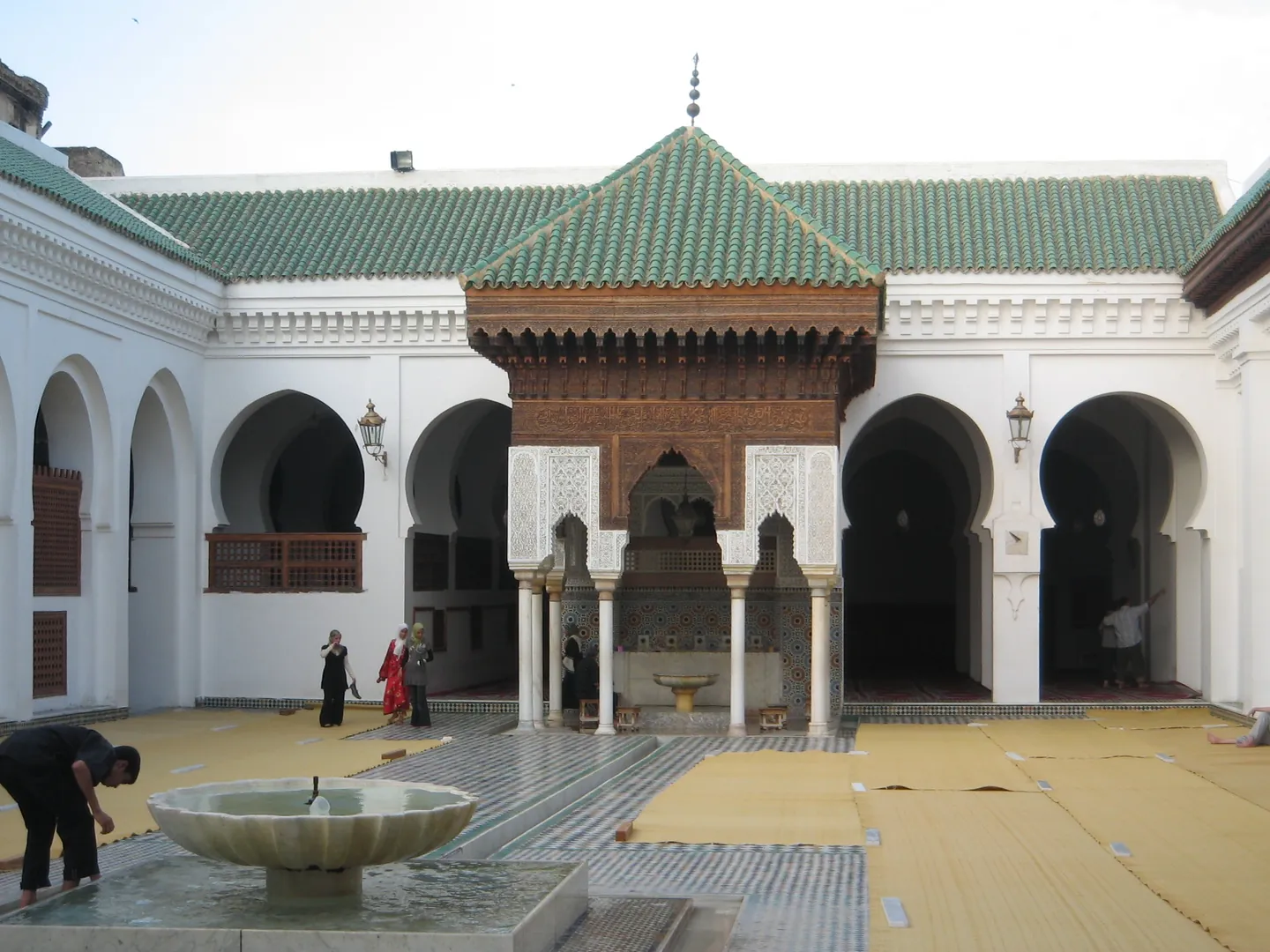
Founded in 859 by Fatima al-Fihri, a scholarly Tunisian woman whose endowment transformed a neighbourhood mosque into a centre of learning, al-Qarawiyyin is often cited among the world's oldest continually operating universities. Its mosque-library complex still anchors Fes's identity as Morocco's intellectual and spiritual heart, a place where Maliki law, astronomy and Arabic grammar were taught while Europe was still assembling its first universities. Non-Muslims typically admire the sanctuary from surrounding lanes and from the restored library's public rooms, where ancient manuscripts rest in climate-controlled quiet. Walk the perimeter slowly, noticing carved cedar and the green-tiled roofs that mark sacred space. Then sit in a nearby café as students and worshippers pass, and let the gravity of a twelve-century-old idea settle: that knowledge, in Fes, has always been a form of devotion.

Chouara Tannery in Fes
Suggested Duration · 1 Hour

Chouara Tannery

Debbaghin Chouara

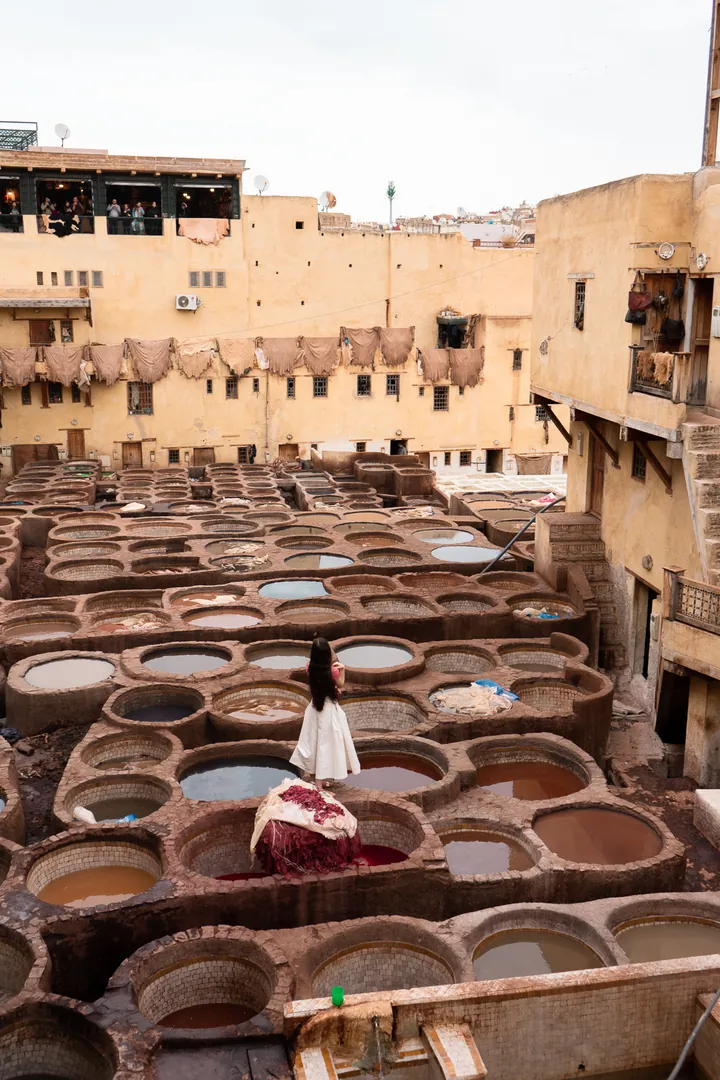
The honeycomb dye pits of Chouara are Fes's most iconic craft tableau, a medieval amphitheatre of stone vats where skins are still softened in a mixture of water, limestone and natural pigments, then coloured in sunflower yellows, poppy reds and indigo blues little changed for centuries. The smell is unforgettable, mineral and animal, which is why terrace attendants still offer a sprig of mint to hold to your nose. View the pits from a leather shop balcony, then go deeper with a guide who can explain guild history, the ethics of buying, and how a bag or babouche is finished. The high-intent experience is commissioning a piece and watching the artisan stamp, dye or tool it while you wait, so you leave not with a souvenir but with the memory of a living craft. Photograph the concentric vats at midday, when the colours are most saturated against the whitewashed walls.

Bab Boujloud in Fes
Suggested Duration · 30 Minutes

Bab Boujloud

Bab Boujloud

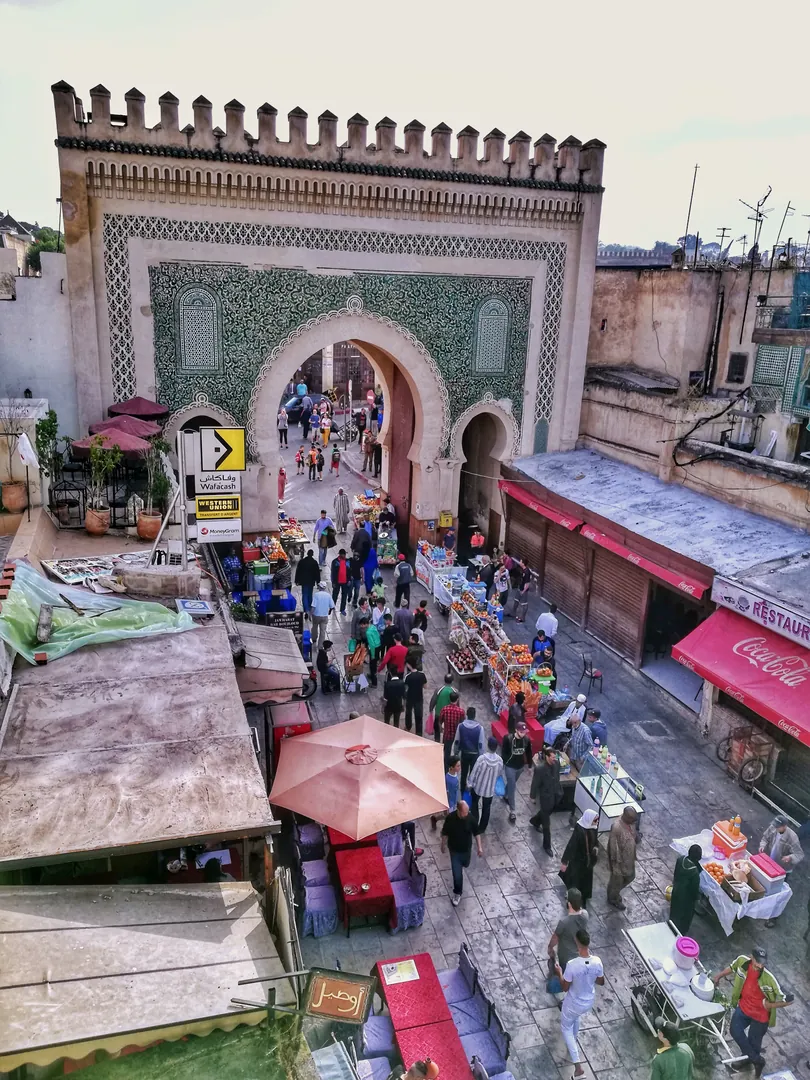
The Blue Gate, a 1913 French-era façade raised over older Almohad foundations, is the ceremonial threshold into Fes el-Bali, its blue-and-green tilework and twin horseshoe arches framing the first dramatic glimpse of the medina's density. Locals still call it the meeting place of the old city: taxis pause, street-food stalls smoke, and the lanes beyond immediately narrow into shadow. Stand in the square and look both ways, blue tiles toward the medina, green toward the palaces, then pass through and let the temperature drop. The essential ritual is simple and luxurious: a glass of fresh orange juice or mint tea at a café facing the gate, watching the human tide, before you commit to the maze. Photographers linger here at dusk, when the zellige catches last light and the minarets of Bou Inania rise just beyond the arch.

Bou Inania & Al-Attarine Madrasas in Fes
Suggested Duration · 2 Hours

Bou Inania & Al-Attarine Madrasas

Medersat Bou Inania w Attarine

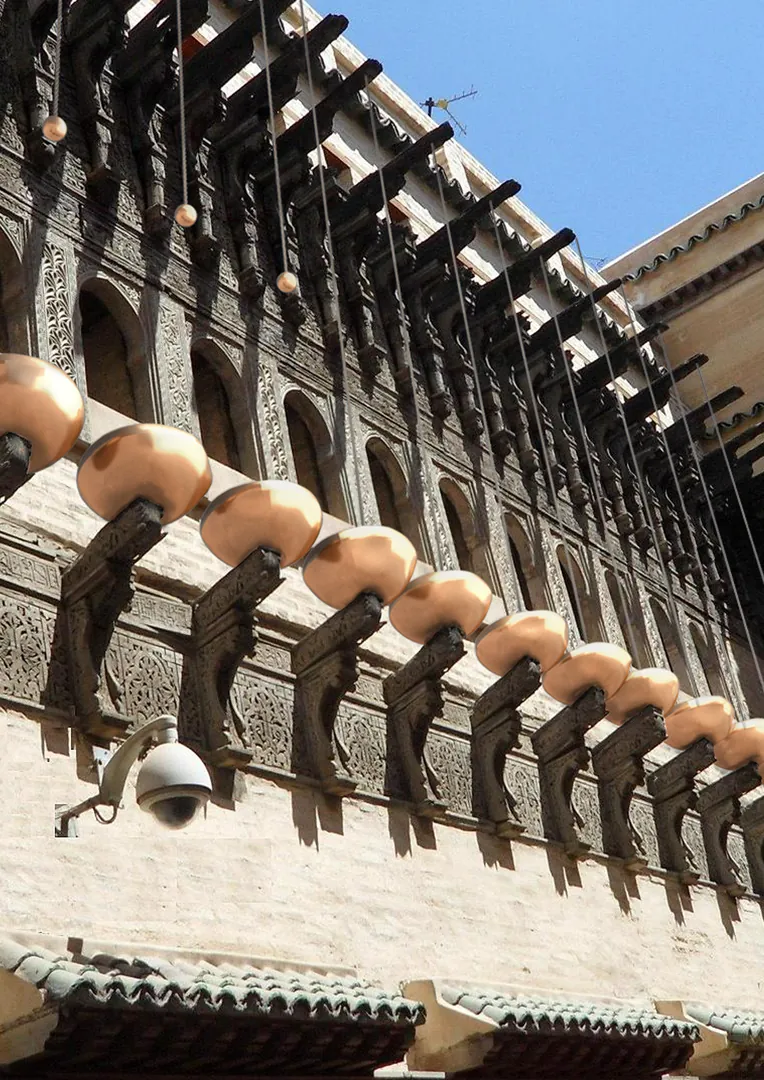
These Marinid theological colleges are among Morocco's finest interiors: carved cedar so dense it looks like lace, onyx and marble fountains, and kaleidoscopic zellige that turns courtyards into jewellery boxes of green, turquoise and gold. Bou Inania, unusually, includes a minaret and remains one of the few religious complexes in Fes that non-Muslims may enter in full; Al-Attarine, tucked beside the spice souk, is smaller, more intimate, and equally exquisite. Together they explain why Fes became the architectural school of the Maghreb. Move from hall to courtyard with your neck craned, tracing Quranic inscriptions and the geometry of tile stars. The signature experience is sitting quietly on a cedar threshold as a guide decodes the symbolism, then stepping back into the spice street, where the scent of cinnamon makes the marble seem even cooler. Allow time; these rooms were designed to slow the mind.

Borj Nord in Fes
Suggested Duration · 1.5 Hours

Borj Nord

Borj Nord

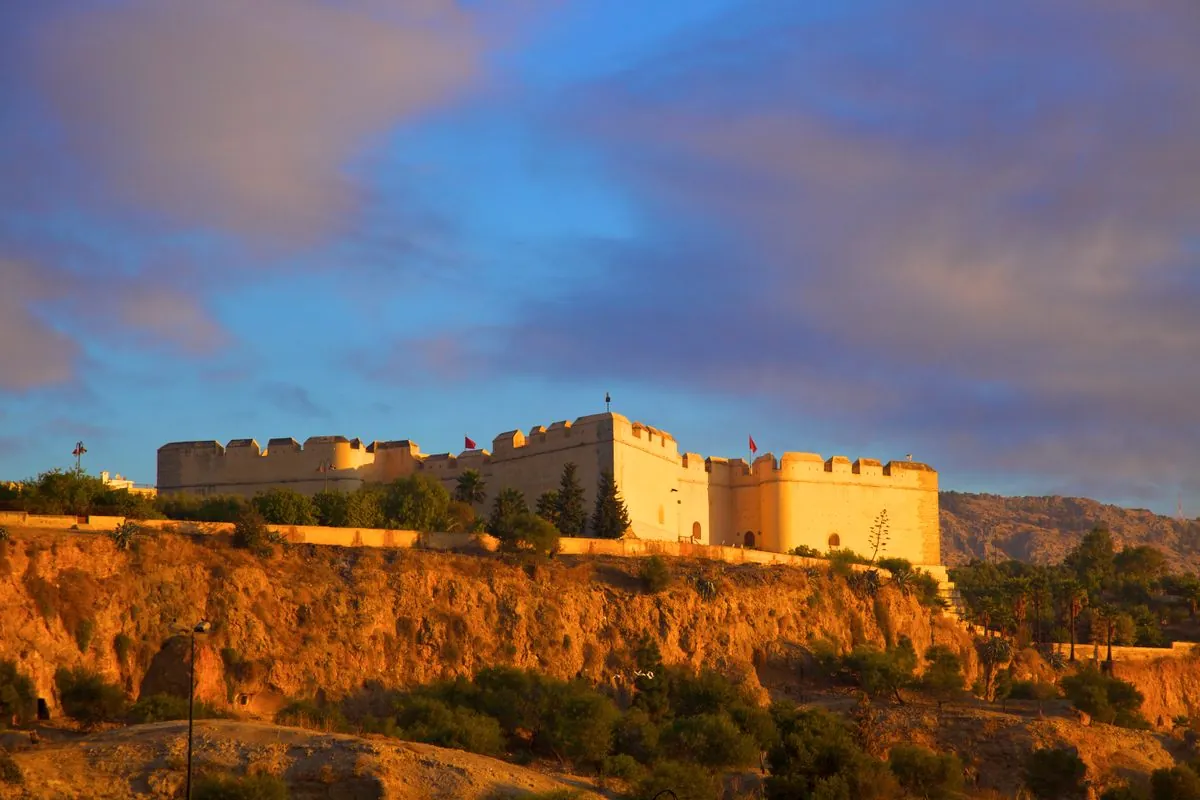
A Saadian fortress raised in the late sixteenth century to watch over a sometimes restless Fes, Borj Nord now occupies a hill north of the medina and houses a museum of arms spanning tribal muskets to royal cannon. The collections matter, but the true luxury is the terrace: a panoramic sweep across Fes el-Bali's packed rooftops, the green pyramidal roofs of the holy shrines, and the pale Middle Atlas on the horizon. Come in late afternoon, when the medina turns the colour of honey and the call to prayer lifts from a hundred minarets at once. Walk the ramparts, then sit with a cold drink and let the city's defensive and topographic logic reveal itself: Fes was never a flat labyrinth, but a bowl of hills, walls and watchtowers. It is the essential wide shot after days spent at alley scale.