MoroccoMiles
Meknès, Morocco — The Versailles of Morocco
All destinations

Imperial Cities · From USD 1,390

Private Custom Meknès Tour

Meknès — The Versailles of Morocco

Local insider briefing

A private custom Meknès tour typically lasts 2 days from USD 1,390 and pairs Bab Mansour with Roman Volubilis and the holy town of Moulay Idriss—imperial Morocco at a pace Fes and Marrakech can no longer offer.

Local insider tips from our 15 years of craft send guests into Heri Souani's vaults and El Hedim at twilight, when the gate tiles catch fire. Our native guides grew up in this olive hinterland and still treat Moulay Ismail's city as a landscape of power, not a lesser imperial stop.

Cultural introduction

Meknès rose under Moulay Ismail into a fortified imperial city of monumental gates, granaries and sacred hinterlands, a southern Versailles of rammed earth and zellige. The pace here is slower than Fes or Marrakech, which is its luxury: you can stand alone before Bab Mansour, then ride out through olive country to Roman Volubilis and the holy town of Moulay Idriss. Meknès is for travellers who want imperial scale without the crush, and who understand that Morocco's most formidable sultan built not only palaces, but a landscape of power.

Bab Mansour · El Hedim Square · Mausoleum of Moulay Ismail · Heri Souani · Habs Qara Prison · Volubilis (Oualili) · Moulay Idriss Zerhoun

Suggested private stay: 2 days · 1 night, shaped around authentic hand-crafted passages and certified native guides.

Visual exploration

Landmarks of Meknès

Local insider tips from our 15 years of craft: hidden historical gems and authentic hand-crafted passages, timed with certified native guides.

Bab Mansour in Meknès
Suggested Duration · 45 Minutes

Bab Mansour

Bab Mansour

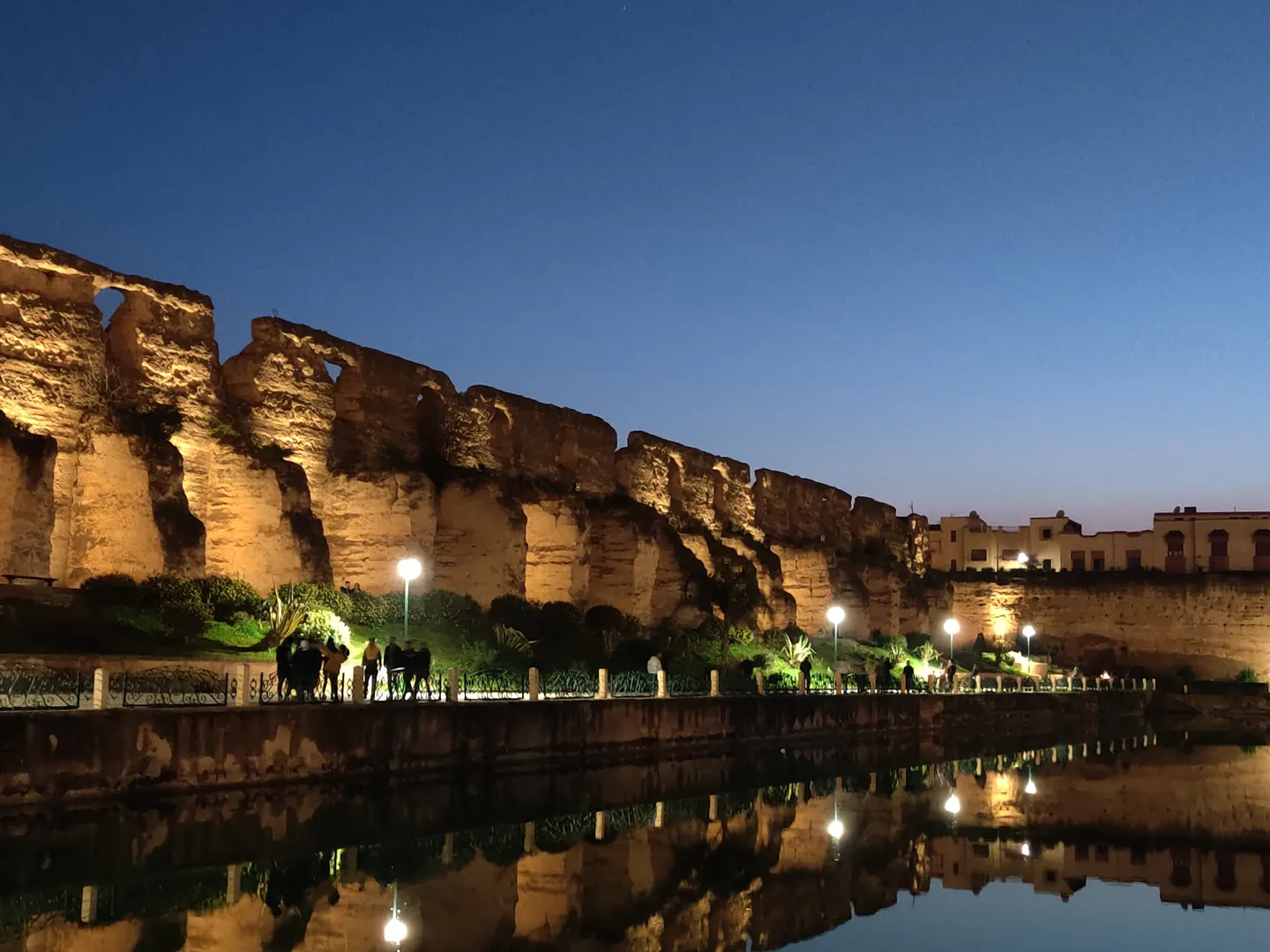
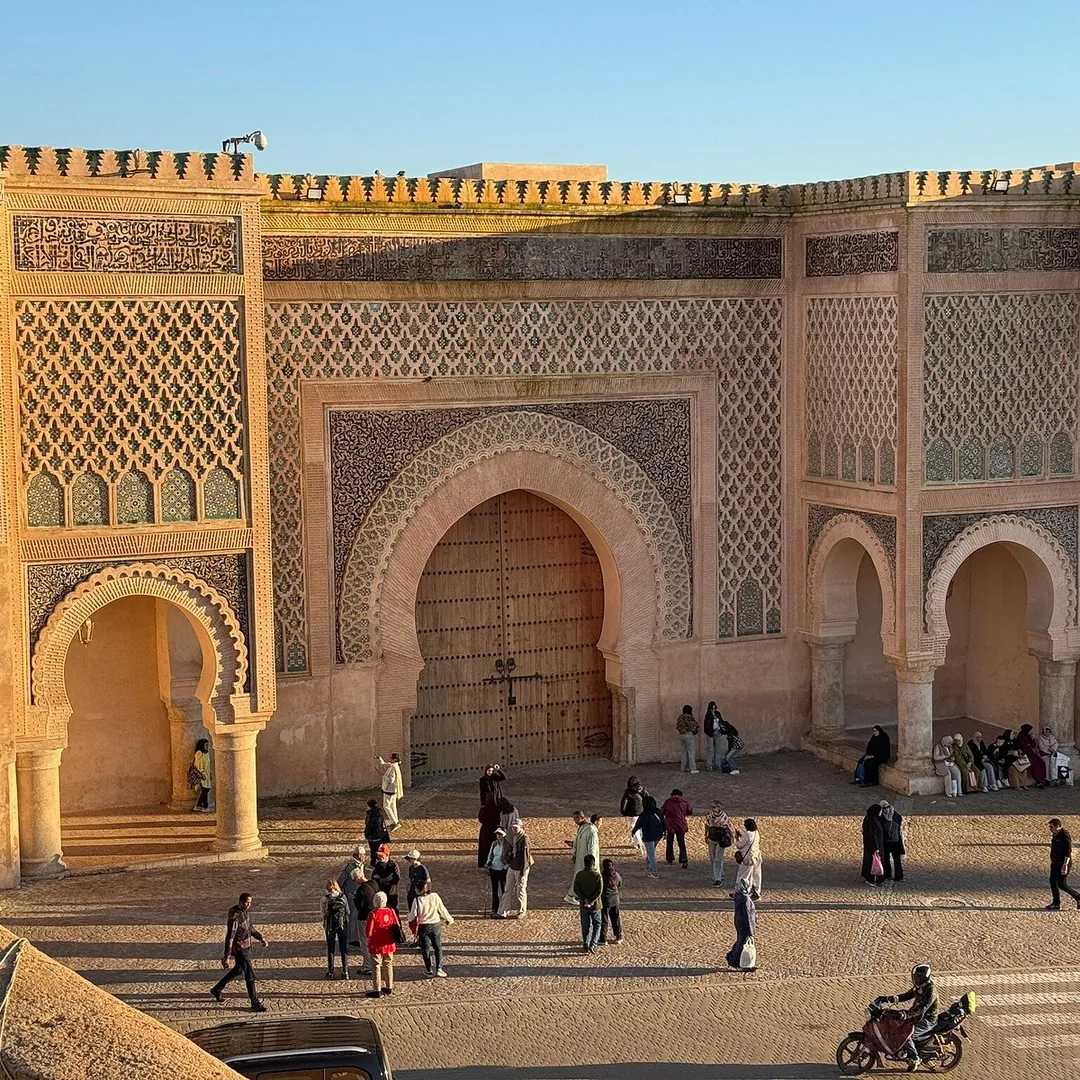
Often ranked among Morocco's finest gates, Bab Mansour announces Ismailian power at El Hedim Square with marble columns stripped from Volubilis, panels of zellige, and an inscription that still reads like a boast in carved plaster. Completed in the early eighteenth century for Moulay Ismail, it is a theatrical entrance to imperial Meknès, massive yet jewelled, a door designed to humble ambassadors. Stand in the square at late afternoon, when the gate's tiles catch fire and horse-drawn calèches rattle past. Photograph the interplay of Roman marble and Moroccan mosaic, then step through into the imperial city beyond. The essential experience is not a five-minute snapshot; it is sitting at a café facing the gate with mint tea, watching light move across three centuries of craft, and feeling why Meknès was meant to rival any court in the Maghreb.
El Hedim Square in Meknès
Suggested Duration · 1.5 Hours

El Hedim Square

Sa7at l-Hedim

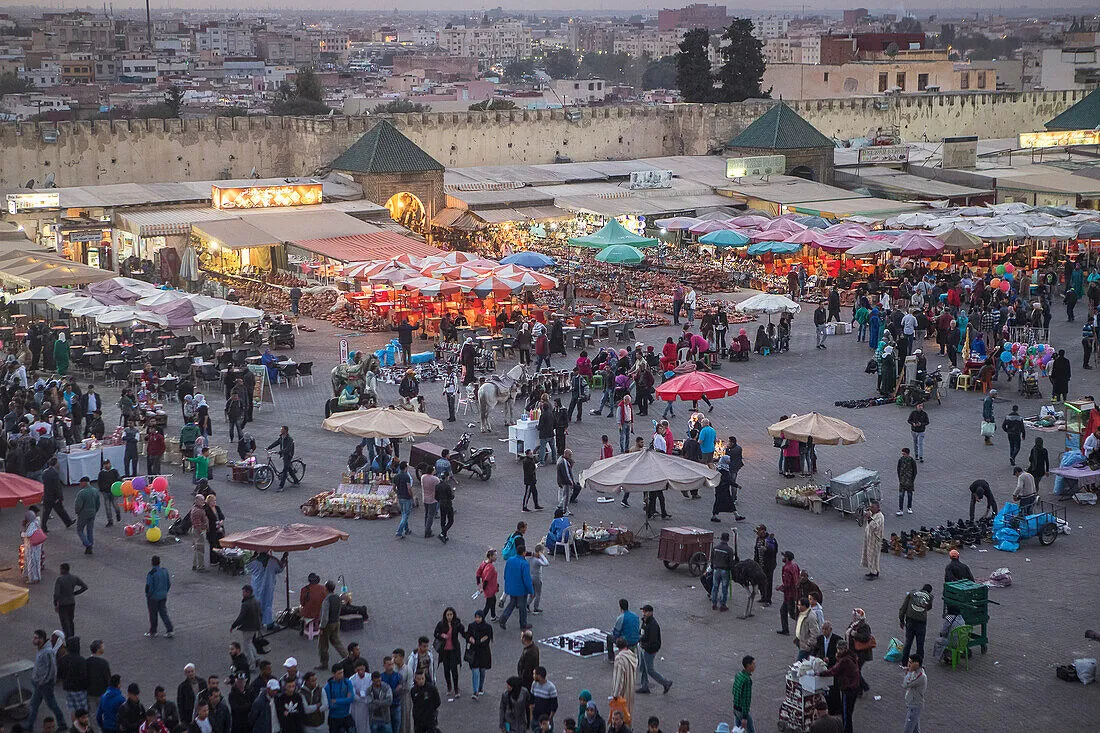
Meknès's public theatre of daily life unfolds on El Hedim, a broad square of food stalls, spice pyramids, storytellers and gate vistas that offers a calmer cousin to Marrakech's Jemaa el-Fna with equal atmospheric charge at twilight. The name, the square of debris, remembers the houses cleared to create Ismail's parade ground; today it is where the city breathes. Arrive as the heat drops. Taste grilled brochettes and harira from a stall, watch children chase footballs beneath Bab Mansour, and let a vendor pour mint tea from an impossible height. Musicians sometimes gather, and the smell of cumin and charcoal mixes with evening cool from the Middle Atlas. This is the strategic anchor of any Meknès stay: a place to sit, observe, and understand that imperial cities were always also markets, kitchens and open-air salons.

Mausoleum of Moulay Ismail in Meknès
Suggested Duration · 1 Hour

Mausoleum of Moulay Ismail

Dari7 Moulay Ismail

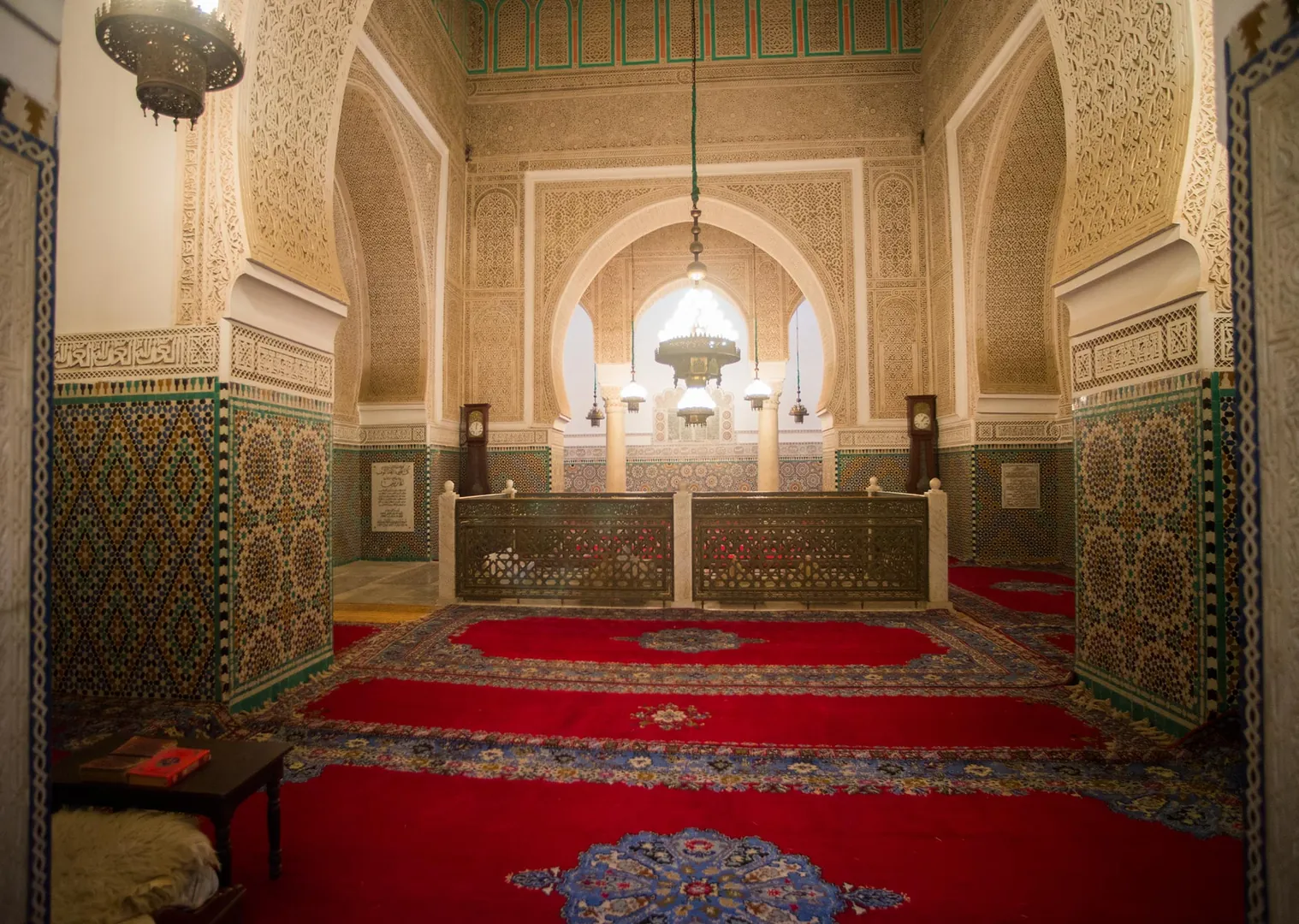
The resting place of Morocco's most formidable Alaouite sultan welcomes visitors of many faiths into serene courtyards of zellige, carved plaster and hushed fountains, an intimate encounter with imperial piety after the bombast of his gates. Moulay Ismail, who ruled from Meknès for more than half a century, is remembered for both his iron will and his vast building campaigns; here the mood is unexpectedly tender. Remove your shoes, speak softly, and move from sun-struck courtyard into the tomb chamber, where the play of cedar, marble and coloured glass feels like a private audience. The signature experience is lingering rather than ticking a box: sitting on a carpeted step as light filters through stained glass, then returning to the outer court to photograph the geometry of tile stars. Few Moroccan interiors combine power and stillness so completely.

Heri Souani in Meknès
Suggested Duration · 1 Hour

Heri Souani

Hri Souani

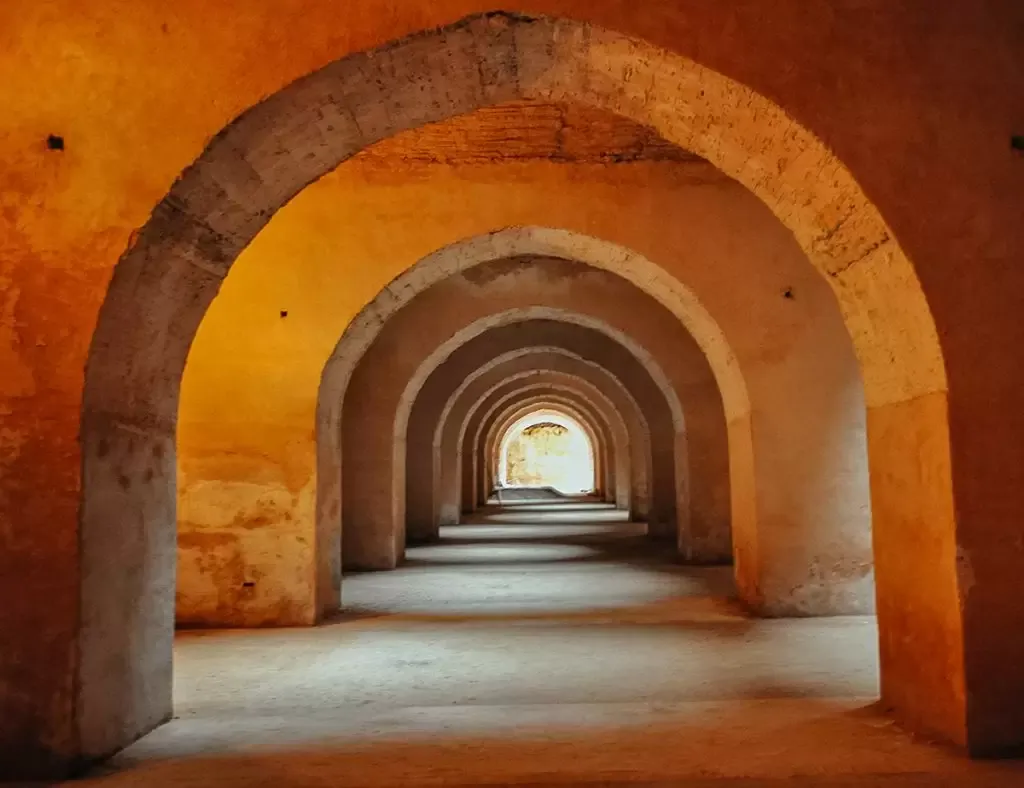
Vast royal granaries and stables reveal Ismailian logistics on a staggering scale: cool vaulted chambers of rammed earth designed to store grain, water and, by some accounts, to stable thousands of horses for a sultan who thought in empires rather than palaces. Walking Heri Souani is like entering the engine room of Meknès, a place of temperature, echo and shadow rather than ornament. Guides still point out the ventilation shafts and cistern logic that kept stores edible through North African summers. Move slowly through the groves of pillars, photograph the honey-coloured vaults, and imagine the clatter of hooves that once filled these halls. The high-intent visit pairs architecture with story: understanding that Moulay Ismail's Versailles was also a machine for feeding and mounting an army. It is one of Morocco's most atmospheric, least crowded imperial interiors.

Habs Qara Prison in Meknès
Suggested Duration · 45 Minutes

Habs Qara Prison

Habs Qara

An underground labyrinth of legend and stone, Habs Qara evokes the darker mythology of Moulay Ismail's reign: a subterranean prison said to have held Christian captives and political enemies in a windowless maze beneath the imperial city. Whether every tale is literal matters less than the atmosphere. You descend into cool, dim chambers where voices drop and the weight of earth presses overhead, a stark counterpoint to the zellige of the mausoleum. Bring a guide who can separate folklore from fabric, then walk the passages with a hand on the rough walls. The experience is brief, unsettling and unforgettable, the kind of site that gives Meknès its moral complexity. Photographers work with shafts of light from the few openings; everyone else simply feels the temperature fall and the stories rise.

Volubilis (Oualili) in Meknès
Suggested Duration · 2.5 Hours

Volubilis (Oualili)

Oualili

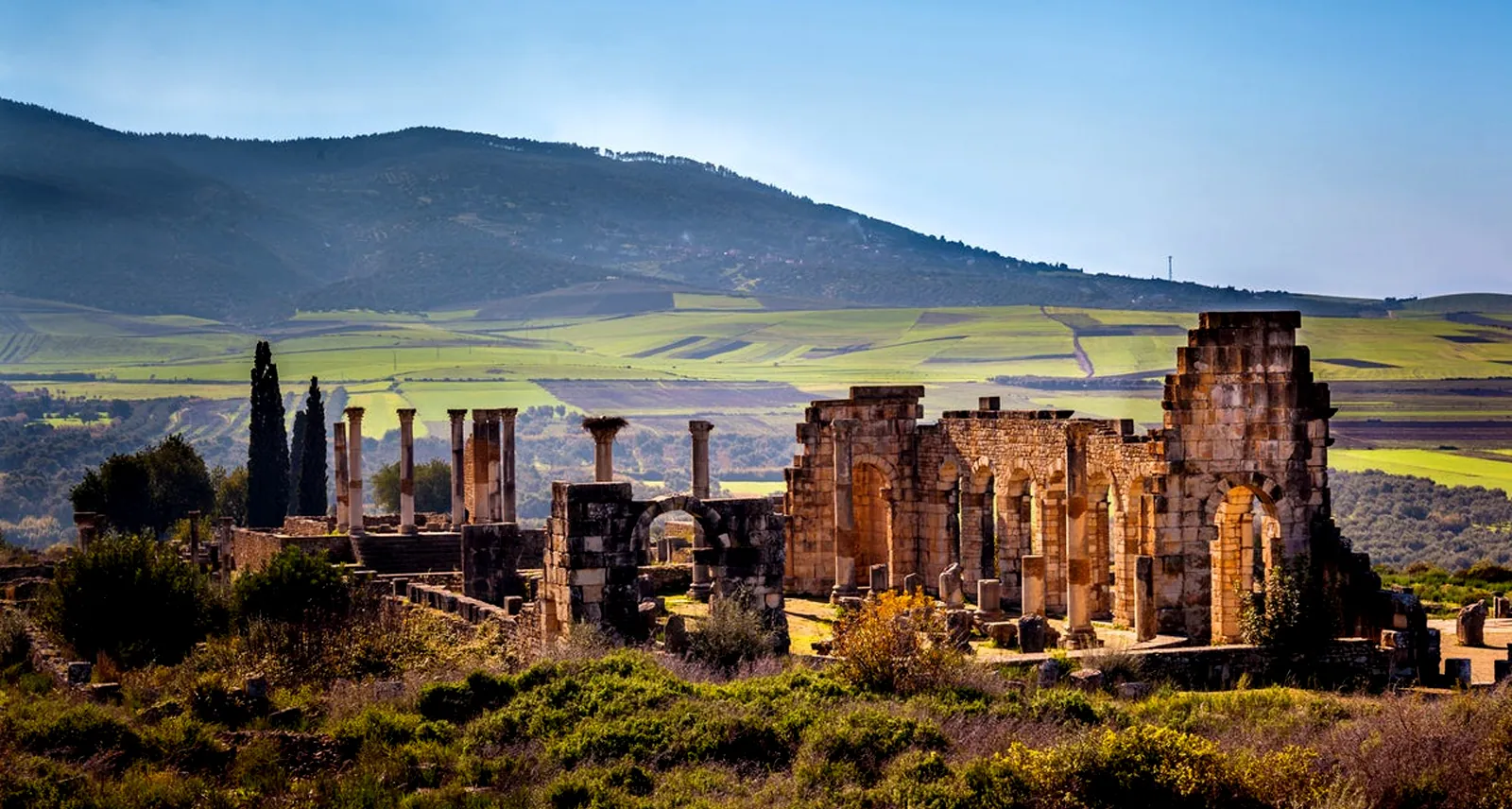
Morocco's finest Roman ruins sit among olive-silvered hills outside Meknès: mosaic floors still bright with Bacchus and the Four Seasons, fragments of a Capitoline temple, a triumphal arch, and the street grid of a prosperous African-Roman city that once shipped olive oil to the empire. UNESCO-listed Volubilis is unmissable, not as a dusty footnote but as a full-day of open-sky archaeology. Walk the Decumanus Maximus at morning, when the mosaics are cool and the Middle Atlas is clear. A specialist guide brings houses to life, then you climb the forum steps and look toward Moulay Idriss on its volcanic spur. The signature luxury is time: sitting on a fallen column with a picnic of olives and bread, lizards flickering over tesserae, and the wind smelling of wild herbs. Rome feels startlingly close, and entirely Moroccan.

Moulay Idriss Zerhoun in Meknès
Suggested Duration · 2 Hours

Moulay Idriss Zerhoun

Moulay Driss Zerhoun

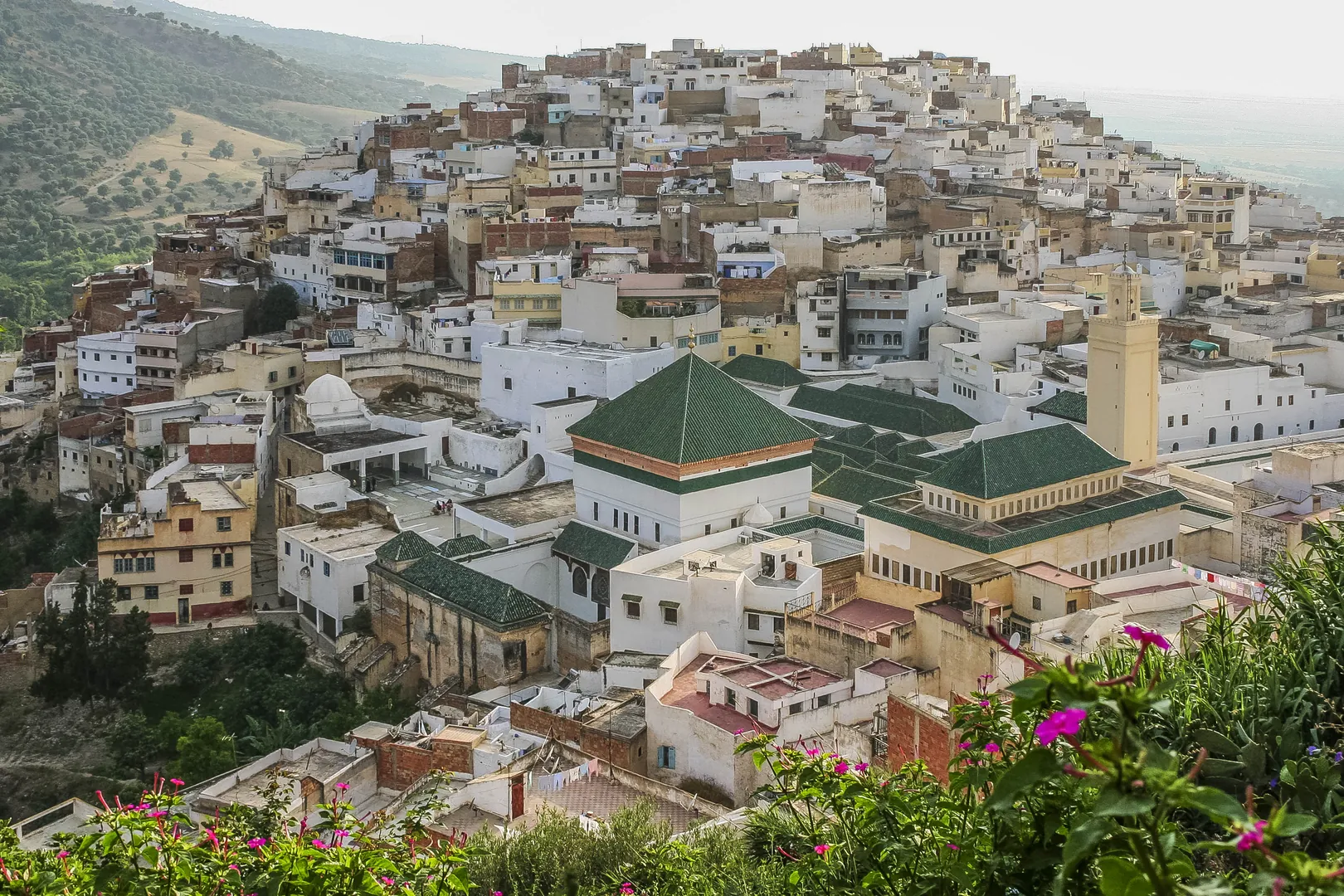
Morocco's holiest town climbs a volcanic spur above the Volubilis plain, white cubes stacked around the shrine of Idris I, the Arab-Amazigh founder of Morocco's first Islamic dynasty and a descendant of the Prophet. Non-Muslims explore terraces, lanes and viewpoints around the sanctuary rather than entering the tomb itself, which only deepens the sense of a living pilgrimage. Come after Volubilis, when the olive hills are still in your eyes. Walk the stepped alleys, photograph the green-tiled pyramid of the mausoleum from a respectful distance, and sit for mint tea with a view of the sacred mountain of Zerhoun. The high-intent experience is cultural rather than touristic: listening to a local explain why this town still draws the faithful, tasting the famous cylindrical couscous of the region, and watching dusk gather on the whitewashed slopes. It is foundational Morocco, intimate and profound.